
How Early Should I Book Fireworks For My Wedding Day?
When it comes to how early you should book a firework display for your wedding day, the short answer is […]
Do you ever find yourself staring at a firework display and wondering what the different effects are called? Well, you aren’t alone!
The sky should be filled with an array of colours, patterns, and effects during a fireworks show, but there are actually only a few different types of fireworks. There are, however, many effects which come from these few types, and this is where the skill of the designer is focused.
If you’re planning to impress with a fireworks display, you’ll have a vision in mind, but it can be hard to find exactly what you need without the expertise. But, as pyrotechnics specialists, that’s where we come in!
We’ll walk you through the different types of fireworks and effects, as well as how they’re typically used in a pyrotechnics display.
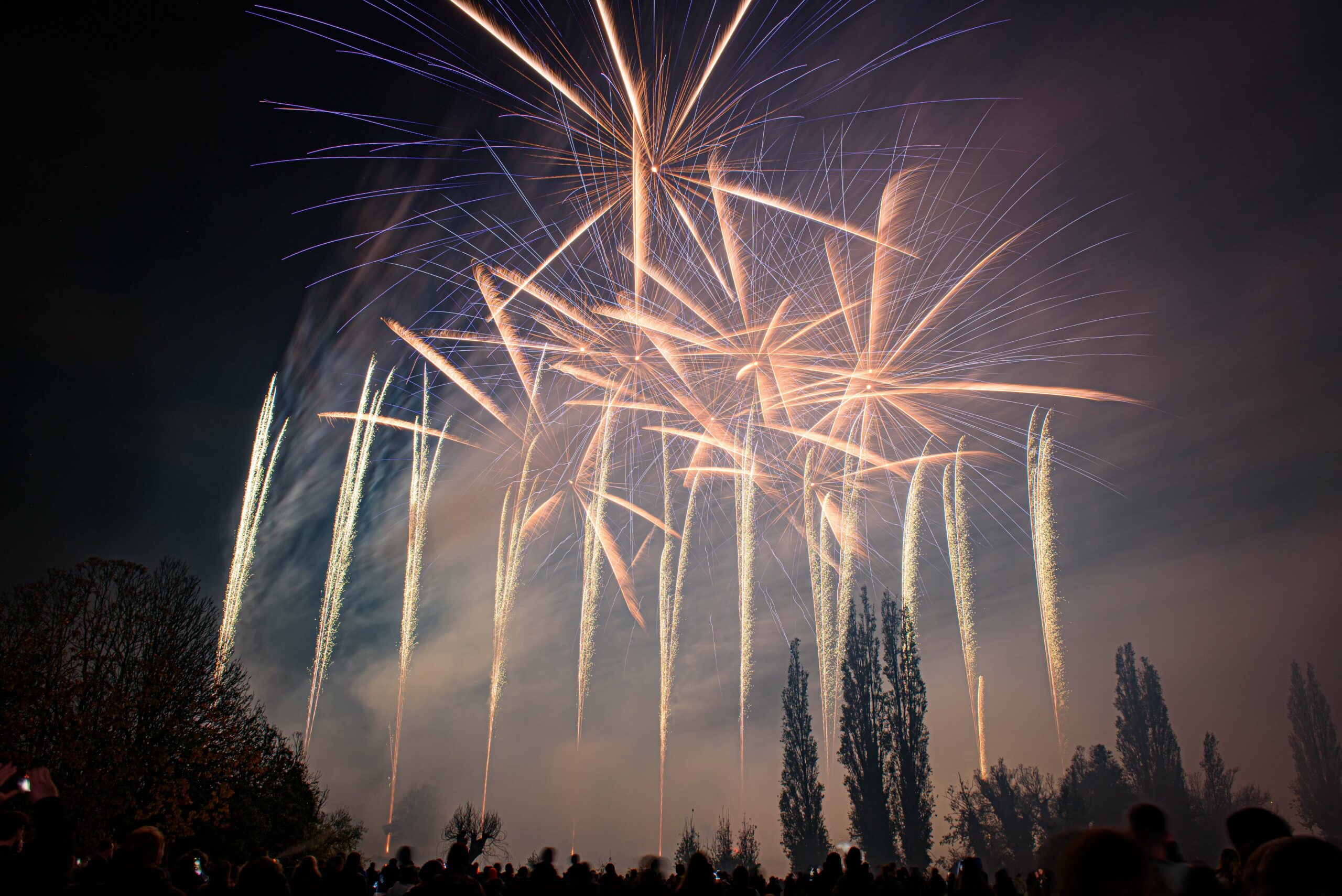
Roman candles are the staple to a firework display, typically lasting for 25 to 30 seconds. Usually including eight shots per candle, this provides continuity. They deliver a wide range of effects as well as noise effects like flash reports, hummers, whistles, crackle and screechers. Fired singly or in bouquets across the width of the site, they can also be angled to create a lattice or various shapes in the sky.
Firework mines contain a propellant charge, where all the units are discharged at the same time in a single ignition and are used in coordination with music to highlight a crescendo or a significant change in tempo or key. When fired en masse from a wide frontage, ground-based firework mines can deliver a huge wall of stars that will wow the audience. Mines come in many different sizes and give a variety of visual and audio effects.
Rocket fireworks are one of the most common types of consumer firework and are used to describe everything people see in the air! A rocket consists of one shot that launches high into the air and explodes in flares of colour. The whoosh of the rocket motor, often accompanied by a gold or silver tail, is almost the signature sound when a TV sound engineer wants to depict BIG fireworks.
Ironically, the professional industry uses rockets less and less because the stick and the rocket motor come back down. If you buy a rocket in the shops, beware of the large head – it can often be full of air and is designed to attract you to buy it. Bigger isn’t always better with rocket fireworks!
The signal effect is mainly a loud report or bang.
Flight rockets are a grouped set of rockets designed to fire simultaneously from a frame or cone and ignited by a single or multiple fuse.
Line rockets travel along a rope or guide, creating visual and/or aural effects. A driver generates thrust to rotate a wheel or move a set piece in fireworks displays. It consists of a tube with pressed composition and a choked end for greater force than a standard gerb.
A rocket containing pyrotechnic composition or units which, when deployed, will descend on a parachute to the ground.
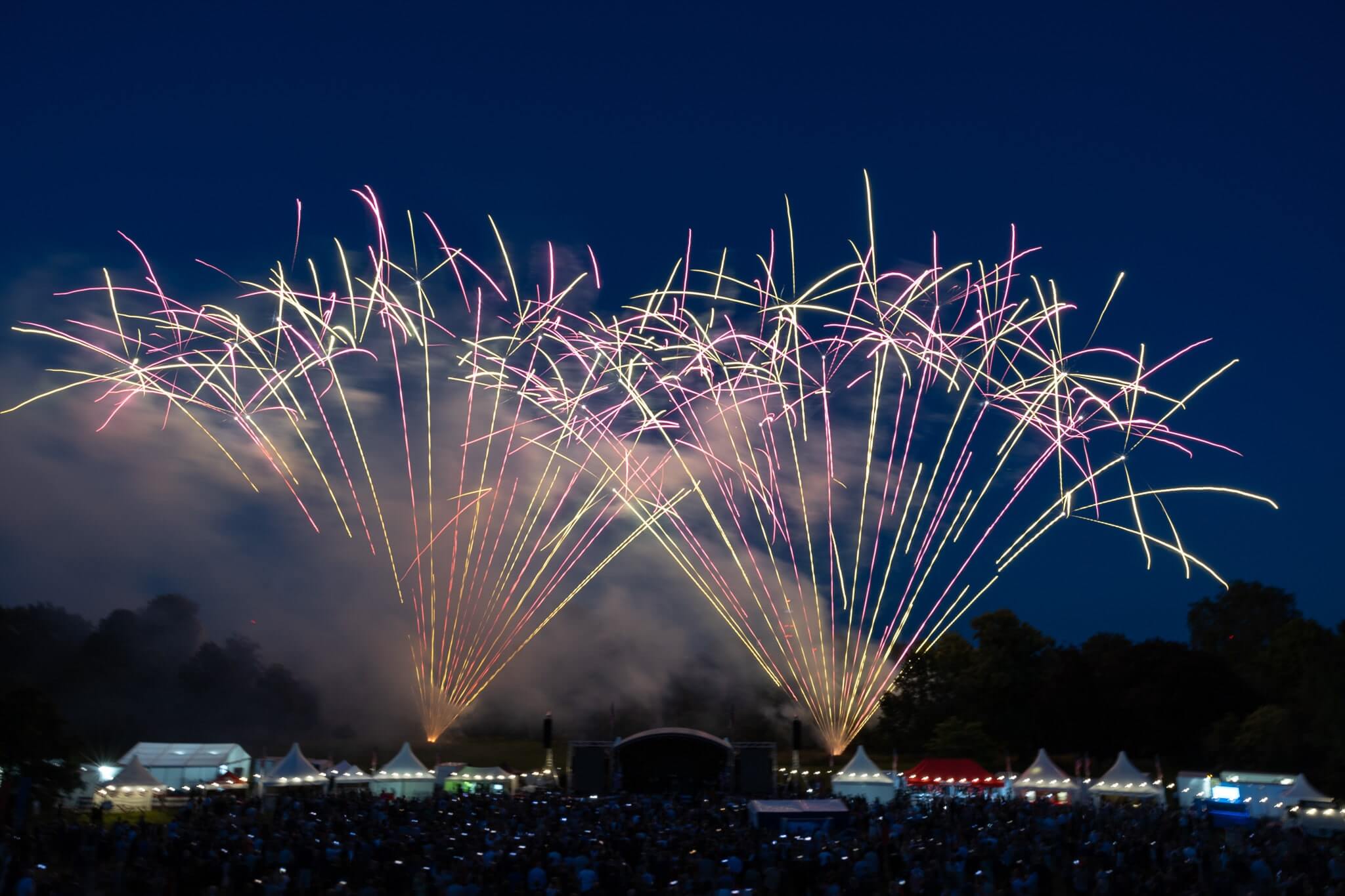
Cake fireworks (also known as Barrages or combination) are a very popular alternative to create continuity and duration in a fireworks display.
Multi-shot Cakes consist of lots of individual, shorter tubes fused together to fire in succession. It delivers a unique pre-programmed volley of effects from rapid fire cakes of only a few seconds to larger cakes with a duration of 2 minutes. They can be straight or pre-angled as fans, Z, S or W- shapes. Cakes come in a wide variety of sizes, from a small 19-shots to gigantic 600-shots.
Barrage, or cake, fireworks are very similar to Roman Candles, offering a large range of effects from the tubes.

Commonwealth Games 2022
A recent addition to the firework choreographers armoury is the single shot firework. Items have become popular with pyromusical firework displays, where a wide frontage of single shot effects can be used to emphasise a particular moment in the soundtrack.
Single shot fireworks are also used to add an extra dimension, providing movement and animation into the display with chase sequences. As the name suggests, they are a single effect from a single tube, although they will come in a whole range of colours and effects.
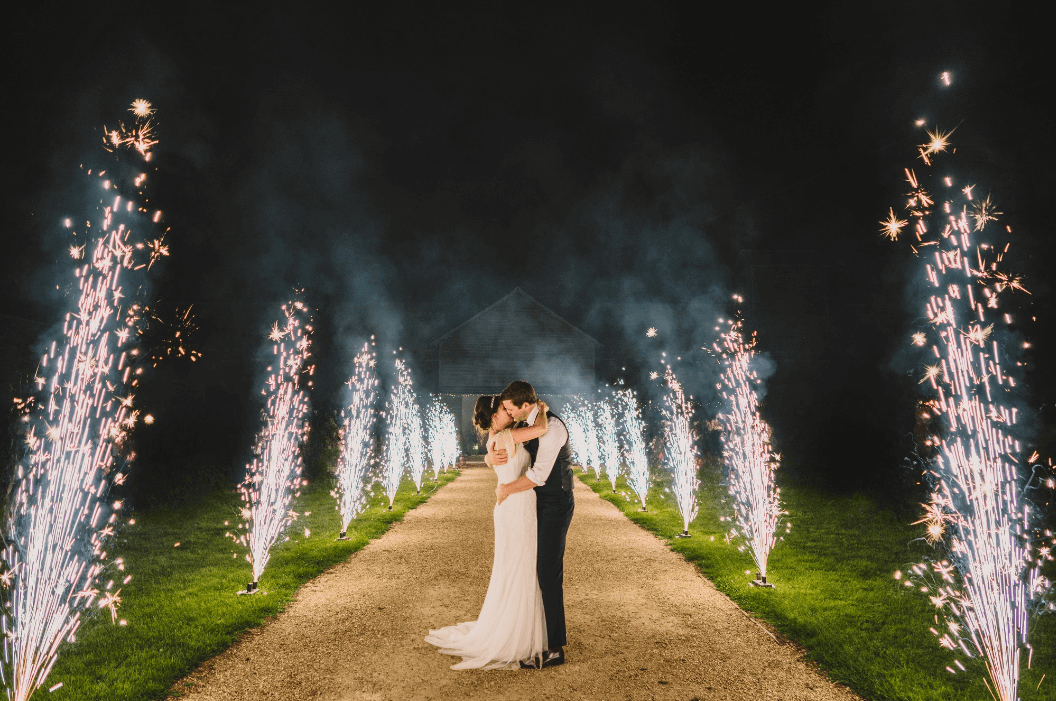
Fountains, also known as gerbs, are another popular type of firework and are a great add on for wedding displays. These range from small silver fountains to large display fountains. They emit a shower of sparks into the air for up to 50 seconds, so they are good at creating a focal point to a pyrotechnics display.
A wheel has propellant-filled tubes on a circular frame, rotating and ascending from thrust. Some, like Catherine wheels, spin vertically on a fixed pole, while others, like girandolas, ascend freely and horizontally they also can feature a double action – falling after the first sequence fires before reigniting for another ascent.
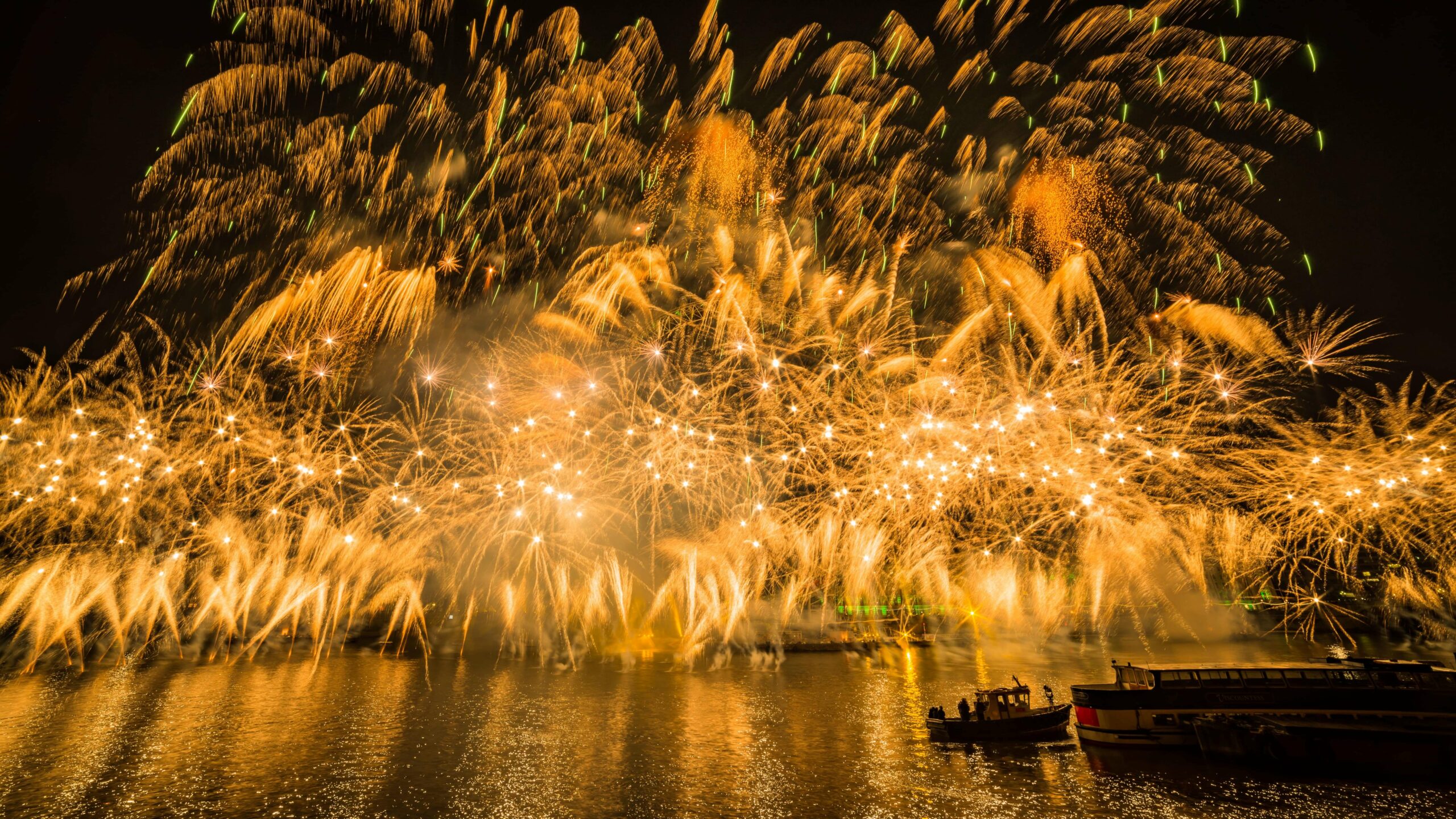
A firework designed to float on the surface of water by means of a buoyancy device or by itself, and to function on or below the water. An example would be a bombette unit fired from a cake, a fountain or gerb held in place by a cork float or a shell.
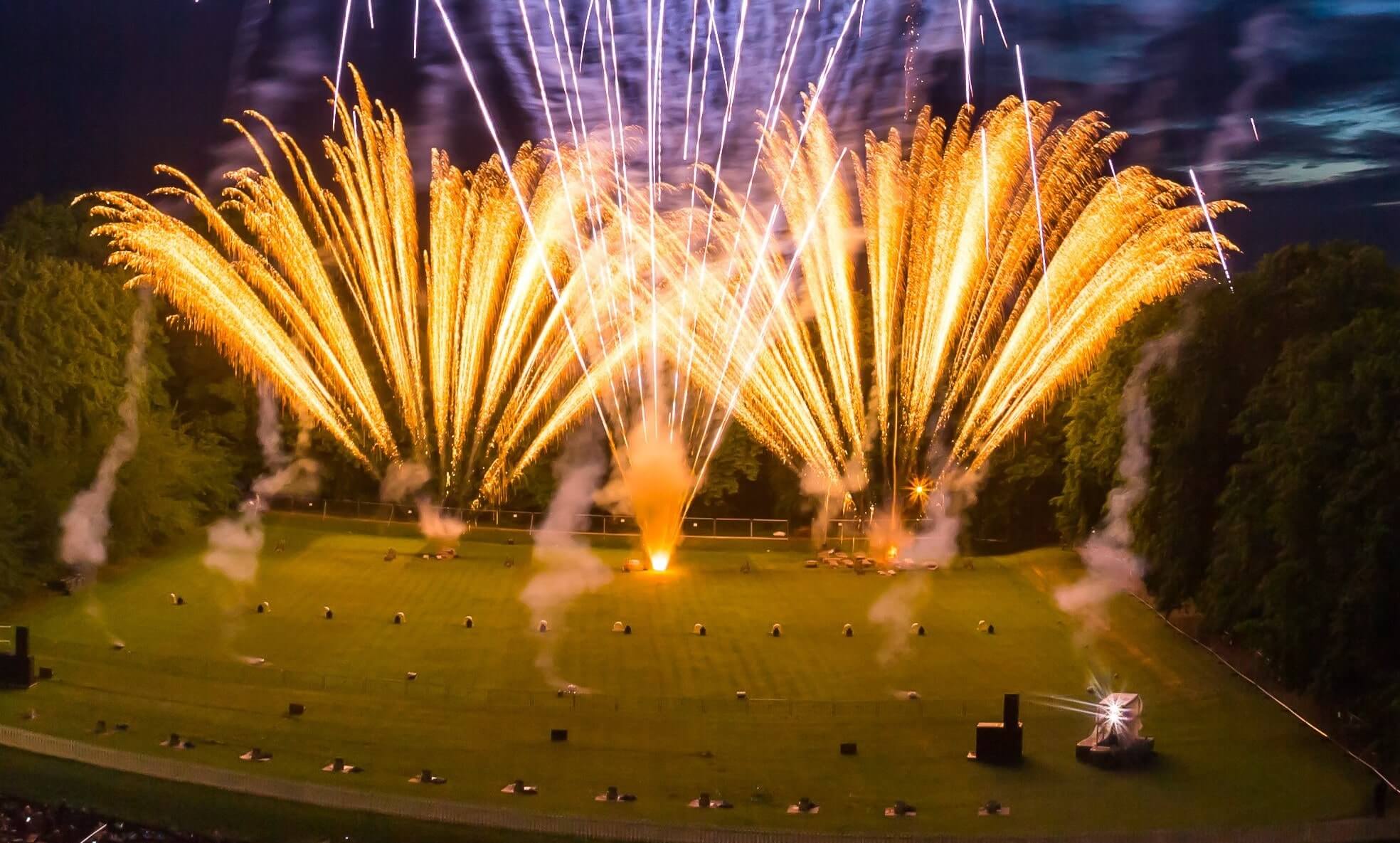
Trinity College May Ball 2024
A slice is normally an assembly of shot tubes arranged in a fanned array. It’s designed to be fired with one ignition point, either as:
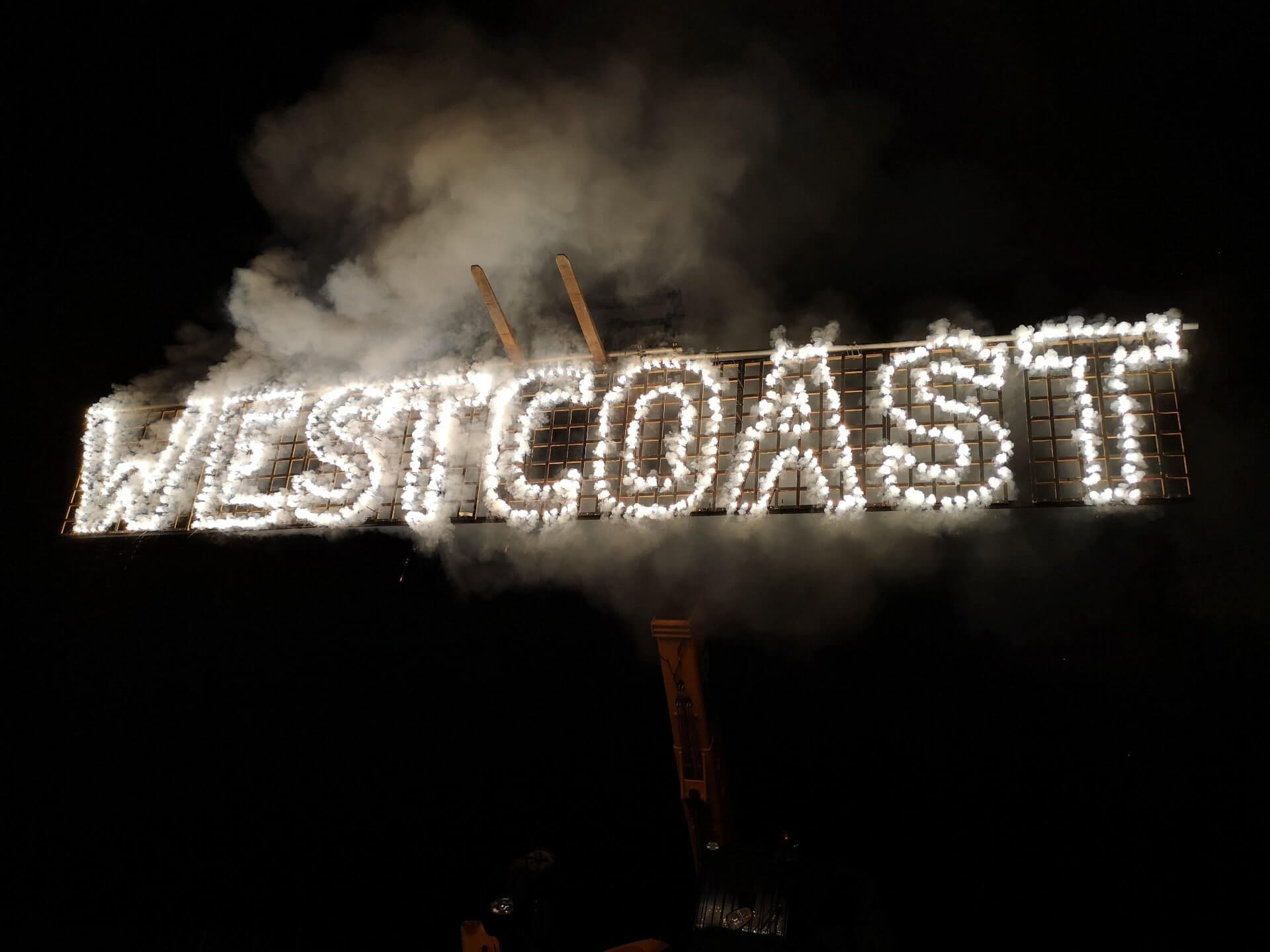
A lancework uses small tubes, the size of a cigarette, containing a pyrotechnic composition. When ignited, it delivers a bright burning flame for up to 60 seconds. It can be attached to a frame and fused together to form a letter or pattern when ignited together. The classic example is GOOD NIGHT at the end of a display. Lancework pieces can represent a complicated logo or image using a range of coloured lances.
A set piece is an assembly of one or multiple elements, which are designed not to rotate. Generally these elements include lances, fountains, gerbs and cascades – but can also include bangers and ground maroons. When arranged on a framework, the fountains can be used to create intricate lattice patterns.
A ground maroon doesn’t have a propellant charge and is designed to be placed on the ground. Its only purpose is to produce a loud bang and bright flash when ignited.
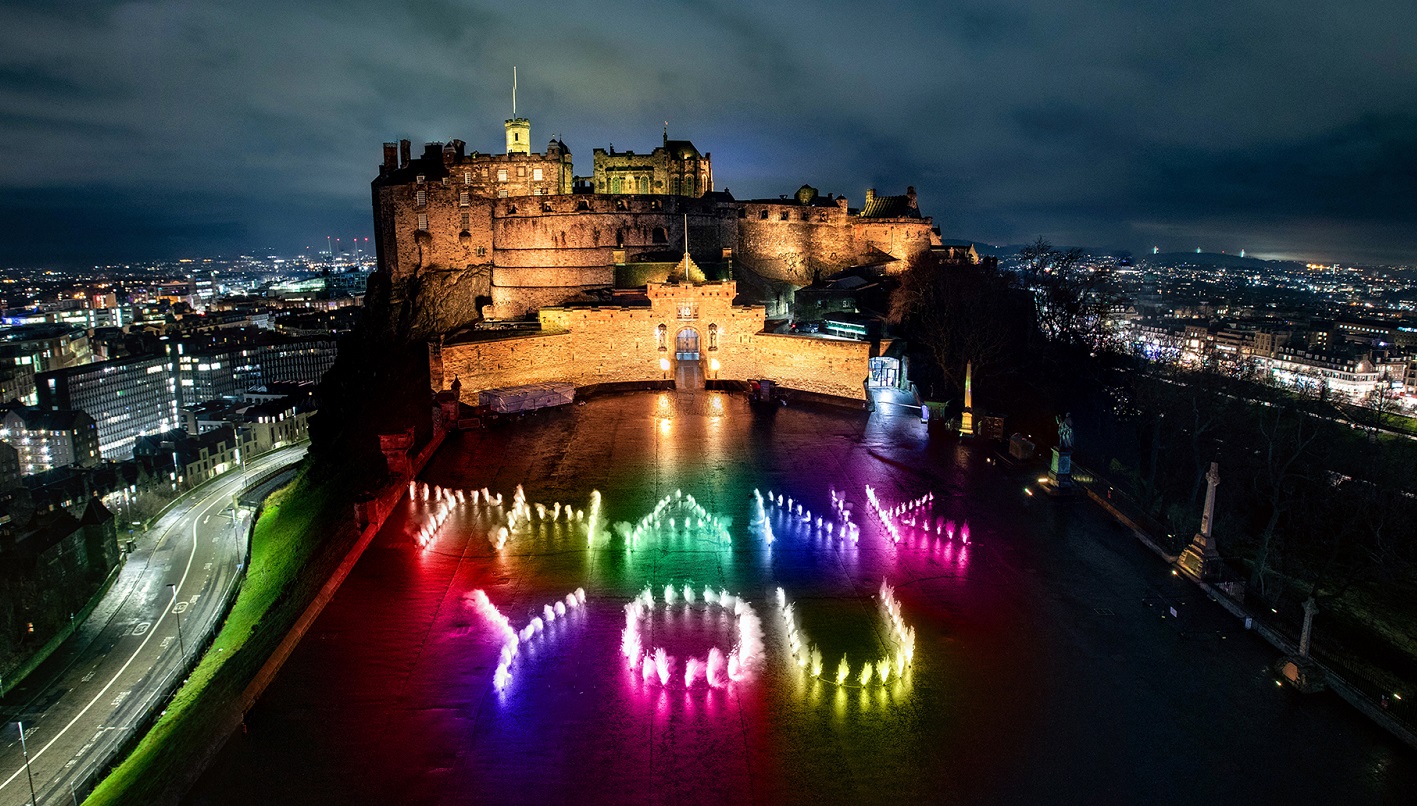
A tube containing a slow burning composition which, when ignited, burns with a bright flame. The tube typically burns away while the Bengal functions. A Bengal is similar to a lance, but is normally a larger tube and is positioned on the ground providing a bright light source.
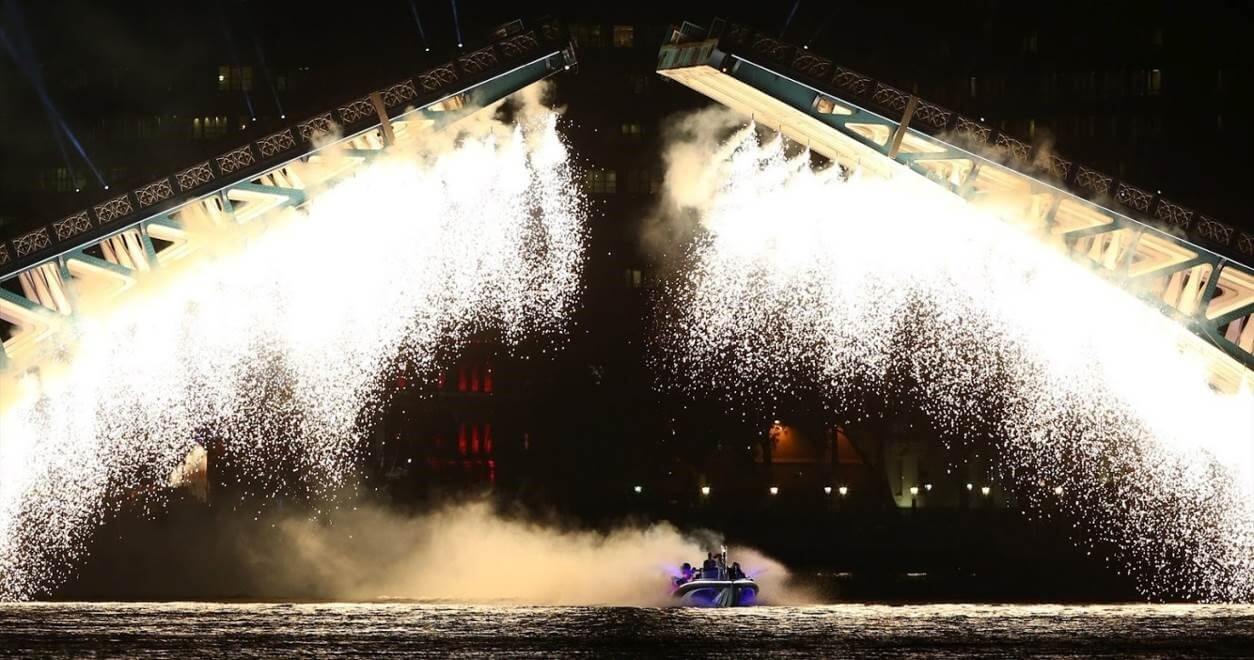
A waterfall is a case containing a pressed pyrotechnic composition that produces a spark and flame, and generally consumes the tube as it burns. Waterfall cases are designed to be suspended above the ground where the sparks fall down creating the illusion of a waterfall of cascading sparks.
Check out our Stadium and Firing from Structures Pyrotechnics page to find out more.
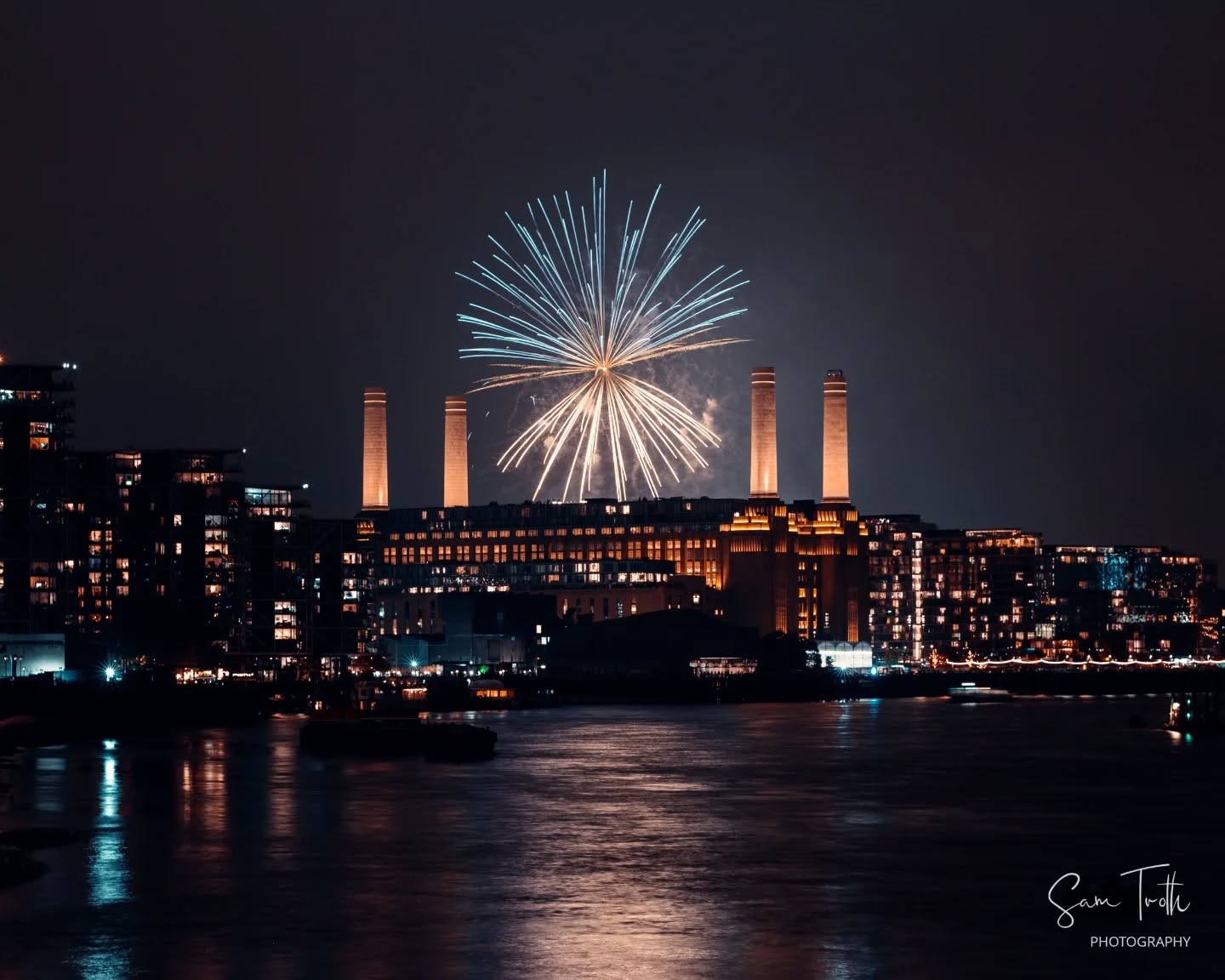
A Shell is only used by professional companies and produces the huge burst in the sky that people normally associate with rockets. Typically, the pyrotechnic composition of units are contained within a casing, which is propelled from a mortar tube. The casing or shell rises with a delay fuse slowly burning to a bursting charge in the center of the shell.
Once the shell has reached its apex, the bursting charge is designed to ignite and burst the composition or units creating a large cluster of burning stars in the sky. Shells are broadly spherical or cylindrical in design, the size and shape of the units to be contained normally dictate which design is preferable.
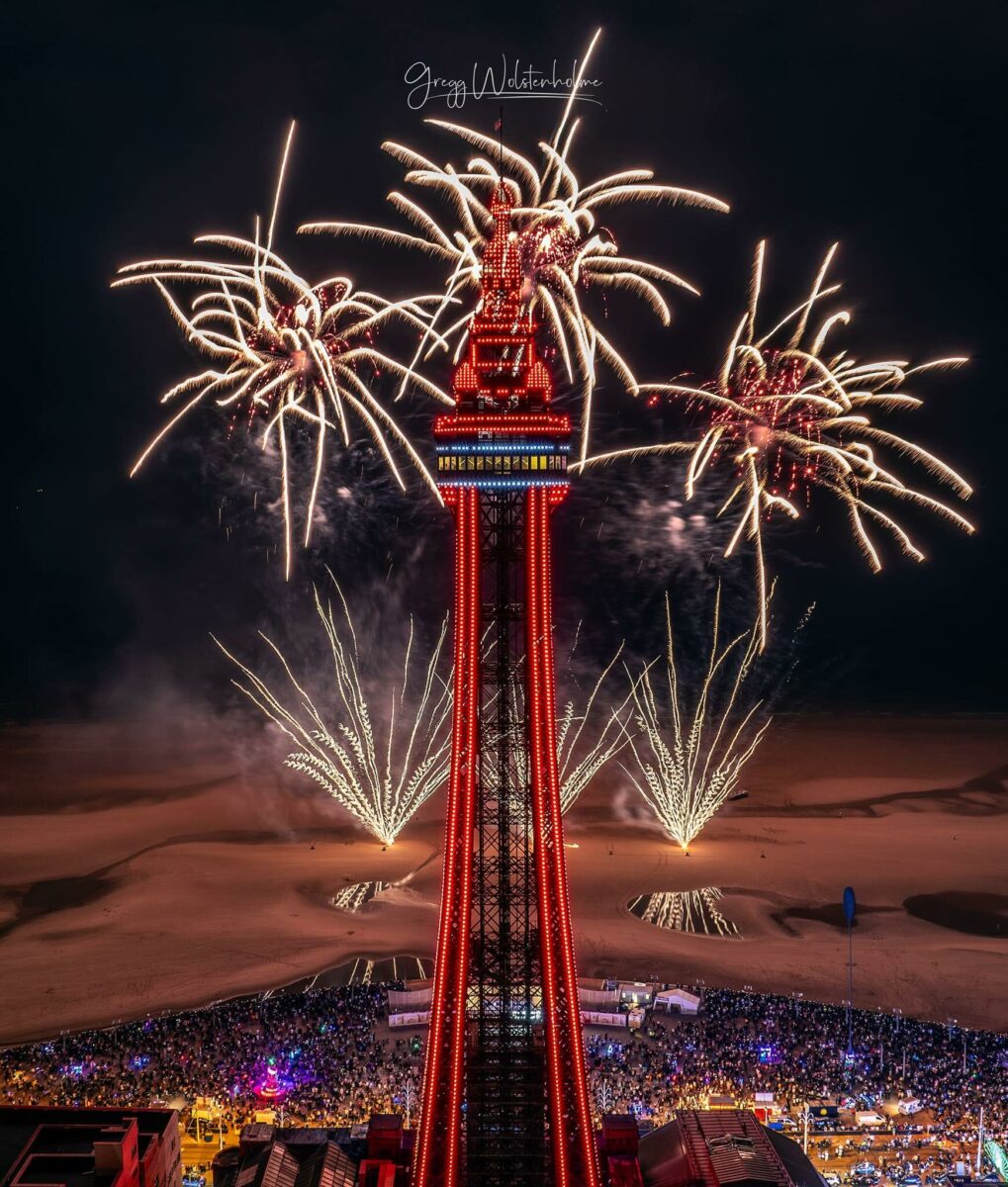
There are many different types of shells for different effects, the most common are:
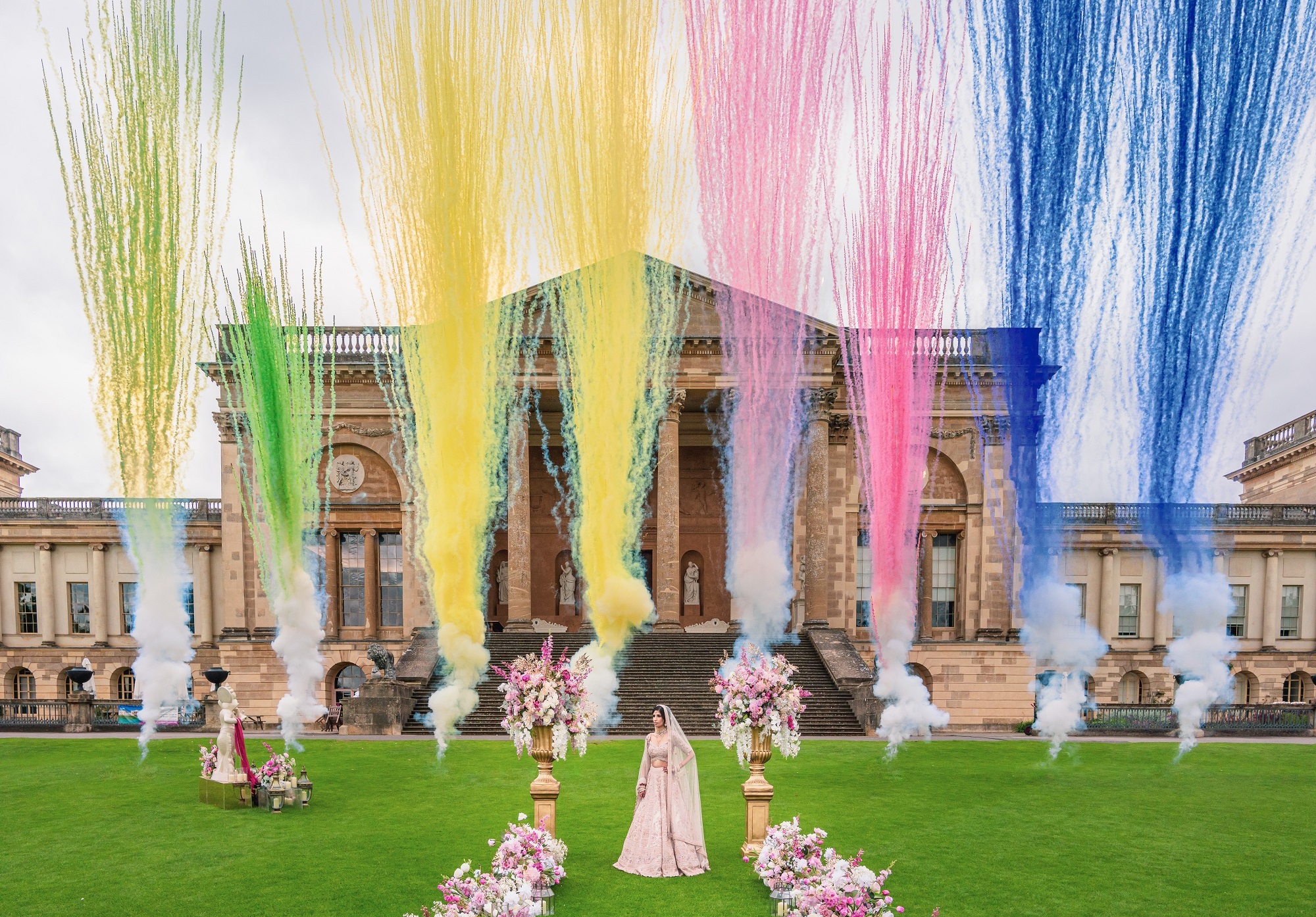
A daylight firework can be comets, mines or shells containing subcomponents or pyrotechnic composition that are visible in the daylight, typically coloured light, dyed smoke or audible noise effects.

Fancy learning a bit more about fireworks? Check out all our blog articles!